 EN
EN

Transformer Factory Acceptance Tests: What Buyers Should Review Before Shipment
|
Slug |
transformer-factory-acceptance-tests-before-shipment |
|
Category |
Knowledge / Quality & Inspection |
|
Meta title |
Transformer Factory Acceptance Tests Before Shipment |
|
Meta description |
Understand transformer FAT planning, routine tests, document review, witness points, deviations and release controls before shipment. |
|
Target keywords |
transformer factory acceptance test; transformer FAT; transformer routine test; transformer inspection |
|
Internal links |
Power Transformers; Oil-Immersed Distribution Transformers; About Us / How We Support Your Order |
|
Image file |
article-03-transformer-factory-acceptance-tests.png |
|
Image alt |
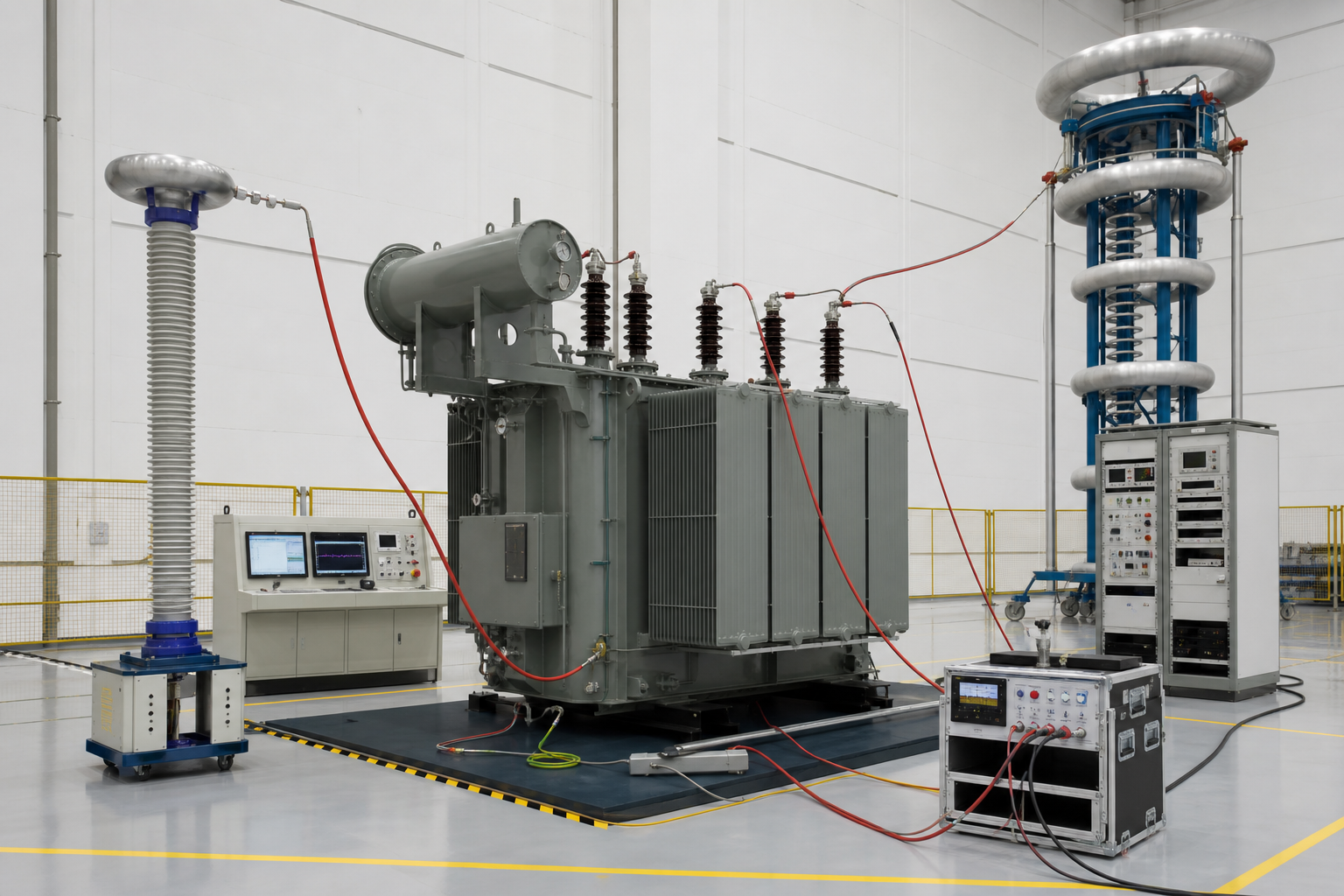
Oil-immersed transformer in a factory acceptance test bay with electrical test equipment |
A useful FAT verifies the agreed design baseline, records test results and closes deviations before shipment release.
FAT is a release process, not only a test day
A transformer factory acceptance test is often described as a visit to witness electrical testing. In practice, an effective FAT begins earlier. The approved drawings, technical schedule, standards, test plan and document list must be aligned before the unit reaches the test bay. The final decision is not simply whether a test instrument produced a number; it is whether the completed transformer and its records match the agreed contract requirements.
IEC 60076-1 provides general requirements for power transformers and distinguishes routine, type and special tests. Project specifications and utility requirements may add further tests or documentation. The agreed test schedule should identify what is included, what is witnessed and what evidence will be supplied.
Confirm the approved technical baseline
Before FAT, compare the latest approved data sheet, outline drawing, nameplate drawing, schematic diagrams, accessory list and terminal arrangement. Check revision numbers. If the factory is testing against a different revision from the buyer, even acceptable electrical results may not prove compliance with the current design.
Review the inspection and test plan
The inspection and test plan should show manufacturing inspections, hold points, witness points, routine tests, additional tests, acceptance criteria and the responsible parties. Confirm whether calibrated instrument certificates, raw test records and photographs are required. If a witness test is remote, agree the camera coverage, document-sharing method and communication channel in advance.
Typical routine electrical tests
The exact list depends on transformer type and applicable standard. Typical routine-test review may include winding resistance, voltage ratio and phase displacement, short-circuit impedance and load loss, no-load loss and current, dielectric tests and checks of auxiliary wiring and protection devices. Results must be evaluated using the agreed rating, tapping position, temperature reference and tolerances.
A buyer should avoid treating one generic checklist as universal. A distribution transformer, dry-type unit, pad-mounted transformer and large power transformer have different construction, accessories and project test requirements.
Mechanical and visual inspection
Electrical results do not replace physical inspection. Verify overall dimensions, terminal orientation, lifting and jacking provisions, earthing points, valves, gauges, cable boxes, radiators, fans, control cabinets, labels, paint finish and accessible hardware. Compare the actual unit with the approved outline drawing and accessory schedule.
Nameplate and documentation
Check that the nameplate uses the correct project name, serial number, ratings, vector group, impedance, cooling, total mass, oil mass where applicable, standards and connection diagram. The final document package should be traceable to the same serial number. Draft test reports can be reviewed at FAT, but shipment release should require controlled final documents according to the contract.
Accessories and functional checks
Verify alarm and trip contacts, temperature indicators, oil-level devices, pressure-relief devices, fans, pumps, space heaters, lighting and marshalling-box wiring as applicable. Confirm terminal numbering and the relationship between the schematic diagram and installed wiring. When communication or monitoring interfaces are included, define how their basic function will be demonstrated.
Handling deviations
Record each deviation with a clear description, evidence, responsible party and closure date. Separate critical issues that block shipment from minor documentation corrections. A verbal promise during FAT is difficult to control later; the release note should list open items and the evidence required for closure.
Packing and shipment release
Before release, review the packing method, moisture protection, accessory packing list, spare parts, shipping marks, transport dimensions and any items removed for shipment. Large transformers may require impact recorders, nitrogen or dry-air provisions and transport monitoring according to the project. The shipment release should link the approved test results, closed punch list and packing records.
Apex coordination approach
Apex Electrics coordinates the buyer’s technical requirements with the selected manufacturing resource, follows document revisions, organizes inspection information and tracks closing evidence before delivery. The objective is a practical, traceable handover rather than an inspection report that is disconnected from the ordered equipment.
|
Suggested CTA Include the required FAT, witness and document clauses in the RFQ so the inspection scope can be priced and scheduled before production. |