 EN

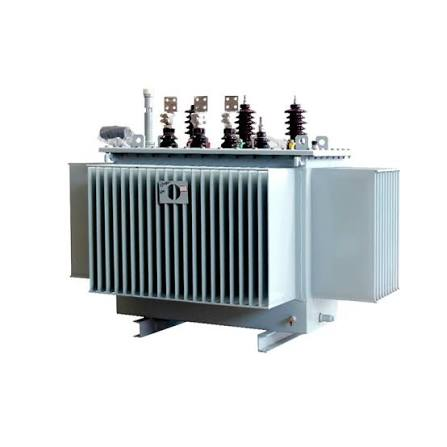
Accelerating Project Timelines with 11kV Compact Substations
For utility-scale solar, mining, and remote microgrid projects, schedule overruns often trace back to substation construction. A factory-assembled 11kV compact substation shifts most of that work off site, enabling civil crews and manufacturers to work in parallel—and cutting energization time by half or more.
Rapid Deployment in Brownfield and Remote Sites
Traditional on-site substation construction follows a rigid sequence: civil works, equipment installation, cabling, and commissioning. In brownfield or remote locations, constrained access, contaminated soil, and weather exposure compound delays—conventional builds frequently exceed 12 months. By contrast, a factory-built 11kV compact substation is fully assembled, wired, and tested before delivery. While the site team prepares a simple foundation or plinth, the enclosure—integrating medium-voltage (MV) switchgear, transformer, low-voltage (LV) distribution, and protection—is completed under controlled conditions. After arrival, crane placement, cable connection, insulation resistance checks, and energization can be completed in as little as 1 to 3 days. A 2024 industry comparison found prefabricated compact substations ready for service in about 6 months—roughly half the timeline of conventional site-built alternatives. For remote solar or microgrid installations, this speed reduces idle labor, demobilization costs, and the risk of missing critical grid connection deadlines.
60% Smaller Footprint vs. Conventional 11kV Switchgear
A conventional 11kV switchgear installation typically requires a dedicated switch room, cable trenches, fire-rated walls, and access corridors. A compact unit integrates the transformer, switching, protection, and LV distribution into a single weatherproof enclosure—delivering up to a 60% smaller footprint than conventional layouts, per 2024 engineering benchmarks. This space efficiency is especially valuable in brownfield retrofits, substation capacity expansions, and solar farms where land leasing or permitting costs are high.
| Parameter | Conventional 11kV switchgear | 11kV compact substation |
|---|---|---|
| Footprint | Baseline | Up to 60% smaller |
| Civil works | Switch room, trenches, fire walls | Plinth or skid only |
| Site installation time | Weeks to months | 1–5 days |
The reduced physical footprint also accelerates planning and regulatory review, as smaller enclosures face fewer siting and environmental constraints.
Case Study: 42-Day Grid Connection for a 45 MW Solar Farm in South Australia
In a 2024 South Australian renewable energy project, a 45 MW solar farm needed to avoid months of switchyard construction and meet a tight grid connection window. The team selected a factory-assembled compact substation with integrated protection, metering, and remote diagnostics. While local crews prepared the foundation and cable ducts, the manufacturer completed full assembly and testing off site. Upon delivery, crane placement, terminations, and final commissioning required only a few days—achieving grid connection in just 42 days from substation placement to energization. Comparable conventional builds in the region typically take five to seven months, so the compact design eliminated most weather- and labor-related delay risks. Faster connection enabled earlier power export, reducing carrying costs and improving internal rate of return.
Reducing Total Cost of Ownership Through 11kV Compact Substation Adoption
Total cost of ownership for an 11kV compact substation extends well beyond equipment price—it includes land grading, civil works, installation labor, commissioning, and long-term maintenance. A whole-life cost perspective is essential.
22–35% Lower CAPEX and 40% Faster ROI Across Utility-Scale Projects
Utility-scale project benchmarks show 22–35% lower capital expenditure when developers choose this design over conventional 11kV switchgear with separate transformer and LV buildings. Savings stem from reduced land grading, smaller concrete pads, shorter cable runs, and fewer structural interfaces. Factory-integrated MV switchgear, transformer, protection, and LV distribution eliminate duplicated enclosures and field assembly. A 2024 TCO assessment across renewable energy projects found civil and installation costs fell by up to 30% due to less site preparation and fewer heavy lifts. Faster installation further cuts financing charges and revenue delay risk—resulting in a 40% faster return on investment, with payback often achieved in 30 months or less versus 50 months for traditional layouts. Lower maintenance complexity and easier access to preconfigured components also enhance whole-life value.
Factory-Tested Modularity Eliminates On-Site Commissioning Delays
Factory-tested modularity shifts commissioning from the unpredictable site environment to a controlled production setting. Each module is fully assembled, wired, and tested before dispatch—including protection relays, interlocks, transformer tests, and LV distribution checks. This eliminates common field delays like miswiring, weather interruptions, and missing components. Field reports from 2023 indicate on-site commissioning time drops by 50–70%, from several weeks to a few days. For remote or brownfield sites, fewer specialist technicians and crane movements are required. Standardized connection points allow civil and electrical teams to work in parallel without waiting for equipment assembly—enabling predictable energization schedules, fewer repeat visits, and lower labor and logistics costs. These efficiencies directly reduce total cost of ownership and simplify financial close.
Enhancing Operational Resilience with Standardized 11kV Compact Substations
Built-In Protection, Monitoring, and Remote Diagnostics
Standardized 11kV compact substations include protection relays, current and voltage transformers, temperature sensors, and remote terminal units as factory-integrated components. Operators gain real-time visibility into load, fault current, and equipment health. Automated fault detection isolates faulty feeders quickly—often before minor events escalate into sustained outages. Remote diagnostics enable condition assessment without site visits, reducing response time and unnecessary travel. This built-in intelligence supports condition-based maintenance instead of fixed-interval servicing and improves safety by minimizing personnel exposure to energized compartments during fault investigation. Standardized communication protocols ensure seamless integration with SCADA and distributed energy resource management systems—enhancing reliability, shortening restoration times, and strengthening the substation’s role as a resilient node in medium-voltage distribution.
Balancing Standardization and Site Adaptability Without Compromise
Standardization reduces design risk—but site conditions vary widely. Engineers maintain common core components—switchgear, transformer, and protection panel—while adjusting cable entry positions, enclosure ventilation, anti-condensation heaters, and foundation interfaces. In coastal or humid environments, corrosion-resistant enclosures and sealed cable glands are specified. In high-temperature regions, forced-air cooling or derated transformer capacity maintains performance without altering the modular layout. Seismic zones benefit from reinforced frames and flexible bus connections; cold climates require heater circuits and low-temperature lubricants. Because adaptations occur within a predefined option set, commissioning and maintenance procedures remain familiar. Utilities avoid custom engineering bottlenecks while meeting local grid codes and environmental constraints—preserving the economies of scale from factory production and the repeatability that reduces human error during installation. Approval cycles shorten, too, as utility engineers review a known design with limited, validated variations—delivering a substation that fits site reality without becoming a one-off prototype.
FAQ
What is an 11kV compact substation?
An 11kV compact substation is a factory-assembled power infrastructure unit that integrates key components like medium-voltage switchgear, transformers, low-voltage distribution, and protection systems into a single enclosure for efficient and rapid deployment.
How long does it take to install a compact substation?
Installation of a compact substation can be completed in as little as 1 to 3 days after delivery, compared to the months required for traditional on-site substation construction.
What are the benefits of using an 11kV compact substation?
Benefits include up to 60% smaller footprint, reduced costs, faster installation and commissioning times, lower maintenance costs, enhanced operational resilience, and quicker return on investment.
How does a compact substation reduce costs?
The design of a compact substation eliminates the need for extensive land grading, cable trenches, and multiple enclosures, lowering capital expenditure by 22–35%, reducing site preparation costs by up to 30%, and achieving faster ROI.
Are 11kV compact substations suitable for all locations?
Yes, compact substations are adaptable to various conditions. They can be customized with corrosion-resistant enclosures, ventilation systems, or reinforced frames as needed for different environmental and regional requirements.
How do compact substations improve operational resilience?
They feature built-in protection systems, monitoring tools, and remote diagnostics that enhance fault detection, enable rapid response, and support condition-based maintenance, ensuring higher reliability and safety.
Table of Contents
- Accelerating Project Timelines with 11kV Compact Substations
- Reducing Total Cost of Ownership Through 11kV Compact Substation Adoption
- Enhancing Operational Resilience with Standardized 11kV Compact Substations
-
FAQ
- What is an 11kV compact substation?
- How long does it take to install a compact substation?
- What are the benefits of using an 11kV compact substation?
- How does a compact substation reduce costs?
- Are 11kV compact substations suitable for all locations?
- How do compact substations improve operational resilience?