 EN

Evaluating Total Cost of Ownership Beyond Initial Capital Expenditure
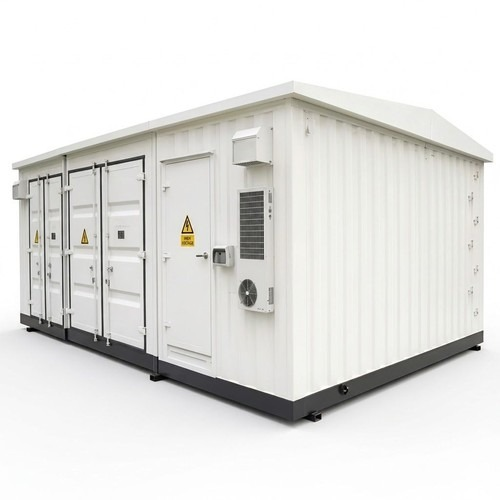
Deploying high-voltage power distribution infrastructure requires balancing initial capital outlays with long-term operational costs. Traditional civil-built substations frequently suffer from extended site timelines, high labor overhead, and unpredictable weather delays that blow past initial project budgets. In contrast, adopting an outdoor prefabricated substation shifts electrical assembly and wiring from unmanageable field conditions into a strictly controlled manufacturing setting. Standardized enclosure designs paired with factory-integrated switchgear can cut civil site preparation footprints by up to 40%, which translates directly into reduced land acquisition costs and minimal excavation work. Direct financial savings emerge from shorter site preparation phases, reduced civil engineering management overhead, and minimal material waste during installation. When assessing the real return on investment for primary power distribution assets, procurement teams and plant engineering leads must look far beyond the initial equipment purchase invoice. Evaluating total lifecycle expenses—including foundation construction, commission timeline risks, transformer losses, and maintenance overhead over a 25-to-30-year operational horizon—consistently demonstrates that prefabricated modular power architectures deliver superior commercial efficiency.
Compressing Deployment Timelines Through Parallel Engineering Principles
Energization speed directly influences overall project financial performance for industrial manufacturing plants, commercial real estate developments, utility-scale solar farms, and data center facilities. Sequential construction models force foundation pouring, structural brickwork, cable tray routing, and high-voltage equipment integration to happen one step at a time outdoors on the job site. Parallel engineering made possible by an outdoor prefabricated substation allows civil ground preparation, foundation casting, and cable trenching to occur on-site while switchgear assemblies, transformers, protective relays, and climate control hardware are built, wired, and tested inside a factory. This dual-track execution model routinely shortens overall commissioning timelines by 30% to 50%. Accelerating grid connection lets commercial operations begin production months ahead of initial schedule targets, generating early cash flow, securing immediate market advantage, and cutting accrued interest on financing facilities tied to extended construction periods.
Mitigating Operational Risks with Factory-Standardized Quality Assurance
Field assembly of complex high-voltage distribution gear creates substantial quality control hazards due to dust accumulation, humidity variations, variable site craftsmanship, and safety concerns during live integration testing. Specifying an outdoor prefabricated substation mitigates field risks by shifting primary electrical assembly into an environment governed by strict ISO quality assurance systems and international engineering standards like IEC 62271-202 and IEEE requirements. Internal busbar connections, protective relay logic circuits, auxiliary power systems, step-down transformers, and automated ventilation loops undergo comprehensive factory acceptance testing before dispatch. Completing full pre-commissioning inside a controlled facility lowers field acceptance testing defects to near zero, avoiding component re-order delays or penalty clauses. Engineered with IP54 or IP65 weatherproofing ratings, heavy-gauge steel cladding, and anti-corrosion surface treatments, these integrated modules withstand extreme thermal shifts, high humidity, windborne dust, and aggressive industrial or coastal atmospheric conditions.
Ensuring Modular Scalability and Operational Adaptability for Future Expansion
Energy demand profiles across modern industrial parks, heavy manufacturing complexes, and electric vehicle fleet charging hubs rarely stay static over their operational lifespan. Building permanent brick-and-mortar substation housing locks facilities into rigid physical limits, making future capacity upgrades complex, expensive, and disruptive to ongoing operations. Utilizing an outdoor prefabricated substation provides modular flexibility, allowing electrical engineering teams to expand medium-voltage distribution capacity incrementally without shutting down active production lines. Prefabricated enclosures organize integrated medium-voltage switchgear, low-voltage distribution panels, dry-type or oil-immersed transformers, and power factor correction units within compact, self-contained structural footprints. If facility master plans change, production layouts reconfigure, or land leases expire, these transportable skid-mounted or containerized substation units can be disconnected, relocated, and re-commissioned at a new site with minimal loss of invested capital.
Lowering Ongoing Operational Expenditure Through Smart Diagnostics
Achieving strong long-term financial returns depends heavily on cutting routine maintenance labor and preventing unscheduled power interruptions that halt production. Modern outdoor prefabricated substation designs incorporate advanced digital condition monitoring sensors, automated thermal imaging loops, and remote telemetry units to provide real-time visibility into transformer temperatures, gas pressure levels, insulation health, and circuit breaker operations. Sealed housing designs stop moisture ingress, airborne dust, and condensation from forming on sensitive switchgear components, significantly extending insulation lifespan and reducing contact degradation. Standardized module layouts simplify spare parts inventory management and speed up field service routines for maintenance technicians. By preventing thermal degradation and insulation breakdown before catastrophic failure occurs, system operators maintain maximum grid availability, avoid utility penalty charges, and secure lower cumulative operating expenses over the total asset lifecycle.
Navigating Regulatory Compliance and Environmental Safety Constraints
Navigating environmental regulations, fire protection codes, and local utility compliance rules represents a major hurdle during power infrastructure deployment. Outdoor prefabricated substation units help streamline municipal planning approvals by incorporating certified environmental containment systems directly into their structural design. Integrated transformer oil retention sumps prevent soil contamination in the event of dielectric fluid leakage, eliminating the need to construct external civil containment pits. Fire-rated structural walls, blast-resistant internal partitions, and automated fire suppression systems protect adjacent facility structures and personnel from electrical arc flash or thermal hazards. Furthermore, sound-attenuating enclosure walls damp acoustic noise from operating transformers, making these compact units suitable for installation near urban commercial zones, residential borders, or noise-sensitive industrial campuses where strict decibel limits apply.
Partnering with APEX Electrics for Engineered Power Distribution Solutions
Selecting an experienced power distribution equipment manufacturer determines whether a complex infrastructure project meets its commercial targets and operational schedules. APEX Electrics produces high-integrity outdoor prefabricated substation systems, delivering customized electrical distribution solutions for global industrial, utility, and commercial applications. Combining heavy-gauge enclosure construction, advanced switchgear integration, and rigorous testing workflows, APEX Electrics supplies transportable substation units built for rapid site integration, extended service life, and reliable field operation. Technical specifications, custom enclosure options, project planning guidelines, and engineering support capabilities are available at APEX Electrics.