 EN

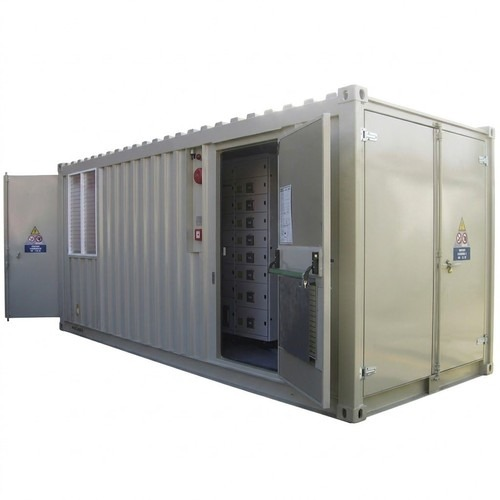
Introduction to Prefabricated Power Distribution Solutions
Modern power distribution infrastructure demands rapid deployment, high operational safety, and maximum reliability across diverse operating environments. As industrial facilities, renewable energy projects, and municipal power grids evolve, traditional brick-and-mortar substation construction is increasingly replaced by prefabricated electrical enclosures. Among the most widely adopted prefabricated solutions are the containerized substation and the compact substation. Both equipment packages integrate medium-voltage (MV) switchgear, distribution transformers, and low-voltage (LV) switchboards into a factory-tested assembly. However, distinct structural engineering principles, thermal management strategies, dimensional limits, and mobility characteristics set them apart. Understanding the core structural and operational distinctions between a containerized substation and a compact box-type substation is essential for power engineers, EPC contractors, and facility managers who must optimize capital expenditure, site footprints, and long-term grid stability. At APEX TECHNOLOGIES, we engineer both prefabricated architectures to comply with international standards such as IEC 62271-202, ensuring tailored performance for specialized application environments worldwide.
Structural Design and Enclosure Architecture
The primary distinction between these two systems lies in their structural casing and internal spatial allocation. A containerized substation utilizes standardized ISO shipping container dimensions (typically 20-foot or 40-foot modular steel structures) or custom-welded E-House enclosures. Built with heavy-gauge corrugated steel, reinforced structural frames, and marine-grade protective coatings, the containerized substation provides an exceptionally rugged shell designed to withstand extreme mechanical stress, seismic activity, and severe atmospheric corrosion. Inside a containerized substation, equipment is arranged within an walk-in aisle design, providing an environmentally controlled interior room where technicians can perform testing, maintenance, and monitoring safely out of the weather. Conversely, a compact substation (frequently referred to as a European-style or American-style box-type prefabricated substation) relies on a highly integrated, non-walk-in layout. It features compartmentalized steel, aluminum alloy, or glass-fiber reinforced concrete (GRP) outer housing with external access doors for each distinct section: MV switchgear, transformer compartment, and LV distribution board. While the compact substation prioritizes minimal physical footprint, the containerized substation maximizes operational flexibility, internal clearance, and auxiliary system integration within a standardized heavy-duty transport shell.
Capacity Ratings and Technical Footprint Comparison
When evaluating electrical power handling and capacity scaling, the containerized substation and the compact unit cater to different project magnitudes. Compact substations are primarily designed for secondary power distribution applications, typically ranging in transformer capacity from 200 kVA up to 5,000 kVA with rated voltages up to 40.5 kV. Their layout is engineered strictly around spatial efficiency, making them ideal for urban distribution grids, commercial complexes, and space-constrained residential areas. In contrast, a containerized substation accommodates significantly higher power densities and complex multi-panel electrical switchgear arrays. Because a containerized substation can house full-scale KYN28 metal-clad indoor MV switchgear, withdrawable GCS/MNS low-voltage switchboards, protection panels, DC battery banks, and SCADA control automation systems, it handles power transformers up to 20 MVA or higher. Furthermore, the structural design of a containerized substation allows multi-module side-by-side coupling or stacked configurations on-site. This structural flexibility allows power system developers to scale substation capacity dynamically without re-engineering the baseline building footprint.
Environmental Adaptation and Thermal Management
Environmental resilience and HVAC cooling strategies differ substantially depending on the chosen enclosure package. Because a compact substation relies on passive ventilation or localized forced-air fans through outer louvers, its cooling capability is directly tied to ambient atmospheric conditions. This makes compact units highly effective in mild to moderate climates, though severe desert environments require specialized solar heat shielding or high-efficiency heat exchangers. On the other hand, a containerized substation is built specifically for extreme ambient environments, including off-shore platforms, high-altitude mining sites, and desert solar farms. A containerized substation incorporates fully insulated sandwich panel walls, active dual-redundant HVAC cooling systems, positive-pressure air filtration to keep out dust, and advanced fire suppression mechanisms. For instance, in utility-scale solar farms operating in ambient temperatures above 45°C, a specialized containerized substation preserves component lifespans by maintaining a controlled indoor microclimate. By isolating sensitive relays, variable frequency drives, and control electronics from external contaminants, the containerized substation prevents premature insulation breakdown and equipment failure caused by sand, humidity, or chemical vapors.
Mobility, Deployment, and Logistics Efficiency
Logistical requirements and site installation workflows present another critical point of comparison between these two prefabricated solutions. Standardized dimensions give the containerized substation an unparalleled advantage in global logistics and temporary power applications. Designed to match standard ISO transport locks, a containerized substation can be shipped via ocean freight, rail, or heavy flatbed transport using established intermodal infrastructure without requiring special oversized transport permits. Once delivered to site, a containerized substation requires minimal civil foundation work—often needing only simple concrete pad footings or steel piers—enabling plug-and-play installation for temporary mining operations, emergency power restoration, or fast-track construction projects. Compact substations are also factory-assembled and pre-tested for fast installation, but their physical transport is typically optimized for regional road delivery near urban centers. While a compact substation excels in permanent municipal installations with fixed perimeter boundaries, the structural portability of a containerized substation makes it the preferred choice for mobile power infrastructure, remote utility projects, and rental fleet assets that may require future relocation.
Selection Criteria: Matching the Substation to Your Project
Choosing between a containerized substation and a compact box-type substation ultimately depends on specific site conditions, capacity demands, maintenance preferences, and total project lifecycle cost. If your project involves municipal grid modernization, high-density real estate, or commercial facilities where land cost is high and spatial footprint must be minimized, a compact prefabricated substation offers a cost-effective, aesthetic, and low-profile solution. However, if your project demands heavy industrial load handling, utility-scale solar EPC integration, remote mining operations, or operation under harsh climatic conditions, a containerized substation provides superior environmental protection, operator safety, and expansion capabilities. APEX TECHNOLOGIES leverages extensive manufacturing expertise to engineer both custom compact substations and fully integrated containerized substation packages. By carefully matching single-line architecture, enclosure material, thermal management, and protection systems to site conditions, APEX TECHNOLOGIES ensures that your power distribution infrastructure operates with maximum efficiency, safety, and operational longevity across its entire service life.
Table of Contents
- Introduction to Prefabricated Power Distribution Solutions
- Structural Design and Enclosure Architecture
- Capacity Ratings and Technical Footprint Comparison
- Environmental Adaptation and Thermal Management
- Mobility, Deployment, and Logistics Efficiency
- Selection Criteria: Matching the Substation to Your Project