 EN

Why Compact Substation Transformers Are Critical for Urban and High-Density Applications
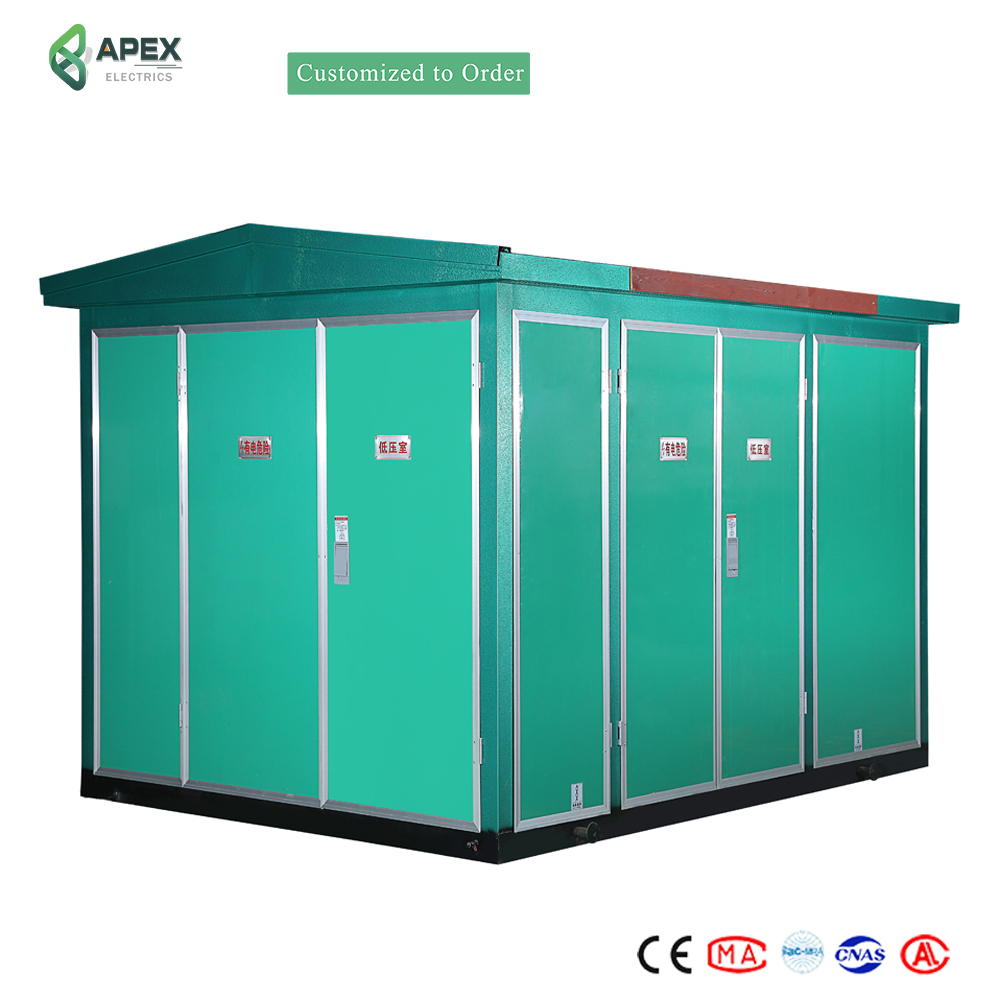
Urban power networks face a hardening equation: rising load density, shrinking available land, and stricter safety and aesthetic expectations. Traditional substations require large parcels, deep civil foundations, and long construction cycles—often impractical in metro corridors, commercial districts, and high-rise zones. Compact substation transformers resolve this mismatch by integrating the transformer, medium-voltage switchgear, and low-voltage distribution equipment into a single, factory-assembled, weather-resistant enclosure. This design reduces footprint by up to 75%, enables deployment in roadside, basement, or embedded locations, shortens cable runs, and eliminates auxiliary structures like separate rooms and trenches.
High-density environments also demand continuity. Hospitals, data centers, transit systems, and underground infrastructure cannot tolerate prolonged outages or exposed live parts. Because much of the assembly, protection integration, and testing occurs at the factory, compact units support faster, lower-risk commissioning—cutting on-site labor and civil work. Their enclosed, arc-rated designs improve personnel safety and reduce visual impact, aligning with increasingly stringent regulations for public and mixed-use spaces.
By 2050, 68% of the global population is projected to live in urban areas (UN 2018). As load concentration grows, utilities and developers rely on these integrated units to modernize constrained distribution networks without expanding land acquisition—delivering a more resilient, space-efficient, and regulatory-compatible path for urban electrification.
How Compact Substation Transformers Achieve Space Efficiency: Core Design and Integration Innovations
Compact substation transformers achieve dramatic space savings through integrated enclosures, advanced magnetic materials, and modular thermal planning—reducing total volume by up to 75% and internal busbar length by 60–70% versus conventional layouts.
Dry-type, amorphous-metal, and integrated enclosure designs minimizing footprint without compromising rating
Dry-type insulation eliminates oil containment rooms, fire barriers, and suppression systems—making compact units suitable for indoor, high-occupancy, and fire-sensitive sites like hospitals and data centers. Amorphous-metal cores cut no-load losses by up to 75% compared to traditional silicon steel, generating less heat at the same kVA rating. That allows smaller cooling systems and tighter enclosure designs without derating. Integrated enclosures combine the transformer, MV switchgear, protection relays, and LV distribution in one factory-tested cabinet—removing the need for separate foundations, dedicated rooms, and interbuilding cable trenches. Optimized core- and shell-type flux paths further improve magnetic balance and efficiency, supporting dry-type ratings up to 4000 kVA within a compact footprint.
Thermal management and modular layout strategies enabling reliable operation in confined spaces
Thermal management is critical in tightly packed enclosures. Dry-type units typically use natural air cooling; higher-capacity oil-insulated variants often employ ONAN (oil natural/air natural) cooling—maintaining safe temperatures without bulky external radiators. Modular layouts isolate the transformer, MV switchgear, and control compartments into ventilated, thermally segregated zones. Dedicated hot-air exhaust paths prevent heat migration to sensitive electronics and protection systems. Internal 3D modeling streamlines cable routing and service access—reducing hot spots and simplifying maintenance in basements, rooftop plant rooms, and underground vaults where traditional substations would be infeasible.
Real-World Impact: Compact Substation Transformer Deployment in Commercial and Renewable Projects
Modern commercial facilities and renewable energy projects frequently lack space for conventional MV switchgear and standalone transformers. Compact substation transformers solve this by consolidating transformation, switching, and protection into a single pre-engineered, factory-integrated unit—especially valuable in downtown buildings, hospitals, data centers, and solar/wind microgrids, where every square meter affects project economics. Instead of allocating multiple rooms, developers install one reinforced-pad or indoor-platform unit—reducing interconnections, installation labor, and long-term maintenance complexity.
Downtown microgrid retrofit: 42% footprint reduction and accelerated commissioning timeline
A representative downtown microgrid retrofit replaced an aging conventional substation—comprising separate HV switchgear, transformer vault, and LV distribution room—with a single compact unit. The result was a 42% reduction in equipment footprint, freeing floor area for revenue-generating uses. Factory-preconfigured modules required minimal site preparation and commissioned in five to eight days—versus several weeks for traditional builds. This accelerated timeline minimized road closures and noise disruption while enabling seamless integration of battery storage and renewable generation—all without expanding the building’s electrical footprint. Such outcomes underscore why compact substation transformers have become a practical, high-value standard for dense urban projects.
Standards, Regulations, and Market Adoption Driving Compact Substation Transformer Growth
Compact substation transformer adoption has shifted from niche to mainstream as updated grid codes and certification frameworks now treat space-saving, integrated designs as fully compliant—not experimental. In dense urban networks, utilities must manage rising loads amid limited vault space, strict noise limits, and narrow access routes. Modern standards clarify requirements for enclosure integrity, insulation coordination, and fault containment under reduced clearances—lowering approval friction and compliance risk.
Market data from 2024 shows pad-mounted configurations with compact footprints accounted for approximately 59.5% of new distribution transformer installations—evidence of growing regulatory confidence in modular, safety-oriented designs. This trend is most pronounced in commercial districts, underground networks, and renewable interconnection points, where escalating land costs make traditional layouts economically untenable.
IEC 62271-202 and IEEE C57.12.00 updates supporting compact substation transformer certification and safety compliance
IEC 62271-202 now includes explicit provisions for prefabricated substation enclosures—covering internal arc testing, mechanical impact resistance, and temperature-rise verification under reduced clearances. These updates enable manufacturers to certify compact units without compromising operator safety. Concurrent revisions to IEEE C57.12.00 clarify dielectric insulation, short-circuit withstand, and overload performance for high-density applications—providing consistent benchmarks for ventilation, egress, and fault containment in confined vaults and pad-mounted sites. Together, these standards create a harmonized, repeatable pathway for third-party certification—accelerating market acceptance across urban distribution and renewable interconnection projects.
Frequently Asked Questions (FAQ)
What is a compact substation transformer?
A compact substation transformer integrates a transformer, medium-voltage switchgear, and low-voltage distribution equipment into a single, factory-assembled enclosure to save space and enhance efficiency.
Why are compact substation transformers ideal for urban areas?
These transformers are designed to reduce footprints, enable deployment in confined spaces, and meet strict safety and aesthetic regulatory compliance, making them perfect for urban environments.
How do compact substation transformers improve safety?
They feature enclosed, arc-rated designs and undergo factory testing for integration of protection systems, making commissioning faster and safer while reducing exposure to live parts.
Can compact substation transformers be used in high-density environments?
Yes, these transformers are highly suitable for high-density environments like hospitals, transit systems, and data centers because of their reliability, reduced footprint, and optimized thermal and electrical designs.
What standards govern compact substation transformers?
Standards like IEC 62271-202 and IEEE C57.12.00 provide guidelines for prefabricated substation enclosures, arc testing, and safety compliance, ensuring their market acceptance and reliability.
Table of Contents
- Why Compact Substation Transformers Are Critical for Urban and High-Density Applications
- How Compact Substation Transformers Achieve Space Efficiency: Core Design and Integration Innovations
- Real-World Impact: Compact Substation Transformer Deployment in Commercial and Renewable Projects
- Standards, Regulations, and Market Adoption Driving Compact Substation Transformer Growth
- Frequently Asked Questions (FAQ)