 EN

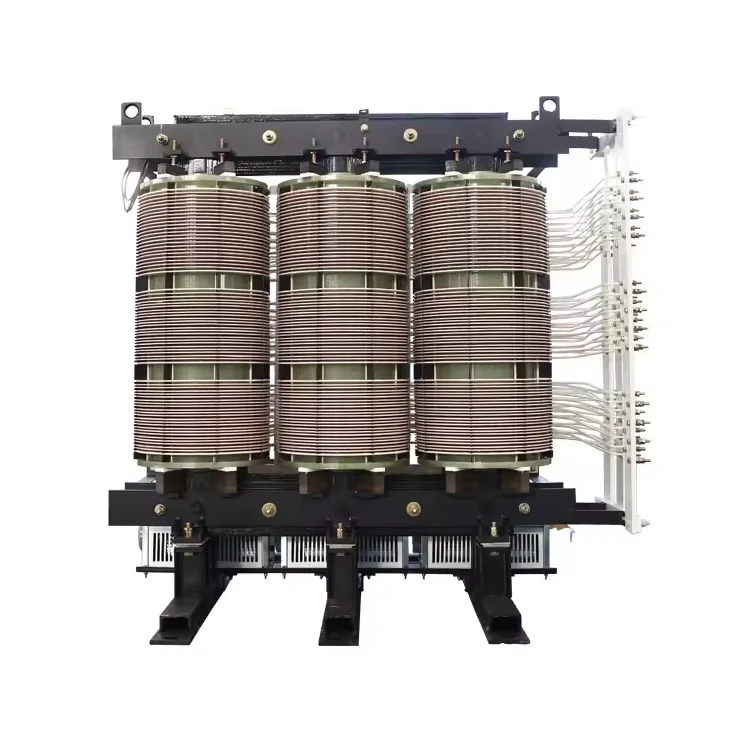
HV Transformers Lifecycle Cost Analysis
Procurement, installation, and commissioning costs
The initial purchase price of an HV transformer represents only a fraction of its total owning cost. Procurement encompasses engineering design, factory acceptance testing (FAT), transport logistics, rigging, foundation work, high-voltage switchgear integration, protection system panels, cabling, and commissioning tests—including winding resistance, insulation resistance, and sweep frequency response analysis (SFRA). Depending on voltage class and site constraints, installation and commissioning can add 20–35% to the base purchase price. A 2023 industrial project comparison found that a high-efficiency model priced at $65,000 delivered over $100,000 in net savings across 25 years versus a $50,000 standard unit—highlighting why procurement teams must evaluate cost per MVA-year, not bid price alone. Heavy-industry projects should also budget for spares, as-built documentation, grid interconnection fees, and scheduled outage windows. Large EHV and UHV units often require specialized rail or road transport, adding indirect cost and scheduling complexity. Total owning cost models must incorporate future energy losses, maintenance, tax treatment, and financing—making reliance on purchase price alone economically unsound.
Maintenance, repair, and refurbishment cost trends
Routine maintenance for HV transformers typically consumes 0.5–2% of replacement value annually—but costs accelerate significantly after year 15 due to insulation ageing, tap-changer wear, cooling fan degradation, and gasket failure. Oil analysis, dissolved gas analysis (DGA), thermography, and mechanical inspections of on-load tap changers (OLTCs) form the core of preventive practices. Condition-based maintenance—guided by real-time DGA trends rather than fixed calendar intervals—reduces annual O&M spend by 10–20% compared with time-based programs (industry O&M data, 2023). Repairs following major failures—especially winding faults—often exceed 30–50% of the cost of a new unit, with lead times stretching beyond 12 months. In contrast, targeted refurbishment—such as oil reclamation, bushing replacement, or core restacking—can extend service life by 10–15 years at roughly 30–40% of replacement capital. A structured 10-year condition monitoring plan enables major interventions during planned outages, reducing forced outage risk and associated production loss.
End-of-life replacement and standby transformer costs
At end-of-life—typically 30–40 years—removal, decommissioning, and disposal may cost 5–15% of a new unit’s price, especially if insulating oil is contaminated with PCBs or other hazardous substances. According to the U.S. Department of Energy (2023), the average age of HV transformers in service exceeds 40 years, underscoring the urgency of proactive replacement planning. Standby units add capital and storage overhead but mitigate downtime exposure: renting a mobile HV transformer as a temporary spare ranges from $15,000–$30,000/month depending on voltage class and MVA rating. Operators should compare the net present value (NPV) of owning a standby unit against the avoided production losses over a 10-year horizon. If replacement lead time exceeds 18 months—or if site-specific outage cost exceeds $25,000/hour—a spare strategy becomes justifiable even without full lifecycle revenue-loss modeling.
Energy Efficiency and Operational Losses of HV Transformers
Operational losses shape long-term ROI because they recur every hour the unit is energized.
Load-dependent losses (no-load and load losses) and their ROI impact
No-load losses—primarily core losses from magnetizing current—are constant and occur 24/7, even at zero load. Load losses—mainly I²R copper losses—scale with the square of current and dominate under high utilization. For a 1,000 kVA unit, a standard grain-oriented steel core design incurs ~2.3 kW no-load loss and ~9.5 kW load loss at 75°C; a high-efficiency amorphous-core alternative reduces those to 0.9 kW and 7.2 kW, respectively.
| Loss parameter | Standard design | High-efficiency design |
|---|---|---|
| No-load loss | 2.3 kW | 0.9 kW |
| Load loss @ 75°C | 9.5 kW | 7.2 kW |
| Total full-load loss | 11.8 kW | 8.1 kW |
| Annual energy saved (6,000 h) | — | ~22,200 kWh |
This 31% reduction in full-load loss translates directly into operating cost avoidance: at 6,000 annual operating hours and $0.12/kWh, the high-efficiency unit saves ~$2,664/year. Because no-load losses persist regardless of demand, they define the baseline energy cost—even during low-load periods—while load-loss reductions deliver increasing returns as utilization rises, particularly in heavy industry.
Energy savings from high-efficiency HV transformers over 20+ years
At 80% loading, a standard 1,000 kVA transformer loses ~6.5 kW versus ~4.0 kW for a high-efficiency counterpart—an annual saving of ~21,900 kWh, or $2,628 at $0.12/kWh. Over 20 years, undiscounted energy savings reach $52,560; over 25 years, they exceed $65,000. These gains accrue without operational changes—and compound with rising electricity prices. A European industrial plant reduced total losses from 5.5 kW to 3.2 kW, cutting annual energy use by 20,148 kWh and saving $2,800. High-efficiency designs also lower cooling demand and thermal stress on insulation systems, extending reliability. For energy-intensive operations, this represents a predictable, low-risk return: recurring savings typically offset the incremental capital cost several times over the asset’s service life.
Reliability, Downtime, and Production Loss Quantification
Mean time between failures (MTBF) and unplanned outage costs
Mean Time Between Failures (MTBF) quantifies average operating hours between unplanned failures. While discrete manufacturing benchmarks often target >500 hours for critical assets, well-maintained HV transformers in heavy industry routinely achieve decades of operation before failure. Unplanned outage costs include direct impacts—idle labor, scrap, restart complexity—and indirect consequences such as delayed shipments, customer penalties, and safety incidents. A single HV transformer failure can cascade across multiple production lines, multiplying financial exposure. Reliability programs integrate MTBF with Mean Time to Repair (MTTR) to calculate system availability. Data-driven maintenance—supported by CMMS-tracked DGA, thermography, and OLTC performance—detects degrading insulation or cooling faults before failure, reducing outage frequency and improving ROI. When MTBF falls below site-defined thresholds, investment in redundancy or refurbishment becomes economically justified.
Production loss valuation per hour of HV transformer downtime
Downtime cost per hour = lost production units × contribution margin per unit + idle labor + allocated overhead + contractual penalties. In heavy industry, HV transformer downtime commonly costs $10,000–$50,000/hour—higher for continuous processes where startup and stabilization add days of lost output. A single 10-hour outage can exceed the cost of a major refurbishment. Valuation must therefore capture both direct production loss and secondary effects like missed deliveries or regulatory noncompliance. Using this hourly figure, teams can benchmark reliability investments: preventing one 10-hour outage valued at $300,000 justifies a $150,000 upgrade with six-month payback. This metric also informs standby capacity decisions—and prevents chronic underinvestment in mission-critical power infrastructure.
Strategic ROI Decision Framework for HV Transformer Investment
A strategic ROI model for HV transformers must weigh total lifecycle economics—not just purchase price. Heavy-industry buyers should assess three interdependent cash-flow streams: capital and installation cost, recurring energy and maintenance cost, and the value of avoided downtime. Net present value (NPV) analysis over a 20–25-year horizon is essential; simple payback obscures late-life reliability decay and escalating loss profiles.
| Decision lever | Key metric | ROI impact |
|---|---|---|
| Capital outlay | Installed cost per MVA | Initial cash outflow |
| Energy performance | No-load and load losses (kW) | Annual operating cost |
| Reliability | Mean time between failures (MTBF) | Unplanned outage avoidance |
| Maintenance access | Condition monitoring and spares availability | Life extension and repair cost control |
HV transformers account for roughly 2–3% of global electricity losses (IEA, 2020). Even a 0.2% efficiency gain on a large unit yields material savings at high load factors. Therefore, investment decisions should prioritize lifecycle cost per delivered MWh and reduction in production-loss exposure—not first cost alone. Procurement teams can approve a premium for high-efficiency designs when the extra capital recovers within five to seven years via lower losses and reduced outage risk. Sensitivity analysis across energy price, annual load hours, and downtime cost ensures robustness. This framework aligns engineering rigor with financial discipline—centering investment logic on lower total cost of ownership and stronger production continuity.
FAQ
What are the main costs associated with HV transformers?
The main costs include procurement and installation, regular maintenance, repairs or refurbishments as needed, and end-of-life replacement. Additionally, there are indirect costs such as energy losses, tax considerations, and financing costs.
What is the typical lifespan of an HV transformer?
Typically, HV transformers have a lifespan of 30–40 years. Aging insulation, tap-changer wear, and other factors contribute to degradation over time.
How do high-efficiency HV transformers save money?
High-efficiency transformers reduce both no-load and load losses, which significantly decrease long-term energy expenses. For instance, a high-efficiency transformer can provide energy savings of over $65,000 during a 25-year operational life.
Why is a lifecycle cost analysis important for HV transformers?
Lifecycle cost analysis accounts for all expenses over the transformer’s lifespan, including purchase price, maintenance, energy losses, and downtime costs. This more holistic analysis ensures economically sound decisions.
What are load-dependent losses and why are they significant?
Load-dependent losses include no-load and load losses. No-load losses are constant, while load losses scale with usage. Reducing these losses can result in substantial energy and cost savings over time, especially in heavy industry.
When should an HV transformer be replaced?
Replacement is typically considered towards the end of its life span (30–40 years), or when failure risks become high and the cost of frequent repairs or production downtime outweighs the cost of replacement.
Are spare or standby HV transformers worth the cost?
Yes, spare or standby transformers can be justified if the costs of downtime or replacement lead times are significantly high. A cost-benefit analysis considering downtime and potential revenue loss should guide this decision.
Table of Contents
- HV Transformers Lifecycle Cost Analysis
- Energy Efficiency and Operational Losses of HV Transformers
- Reliability, Downtime, and Production Loss Quantification
- Strategic ROI Decision Framework for HV Transformer Investment
-
FAQ
- What are the main costs associated with HV transformers?
- What is the typical lifespan of an HV transformer?
- How do high-efficiency HV transformers save money?
- Why is a lifecycle cost analysis important for HV transformers?
- What are load-dependent losses and why are they significant?
- When should an HV transformer be replaced?
- Are spare or standby HV transformers worth the cost?