 EN
The Evolving Paradigm of Indoor Electrical Distribution
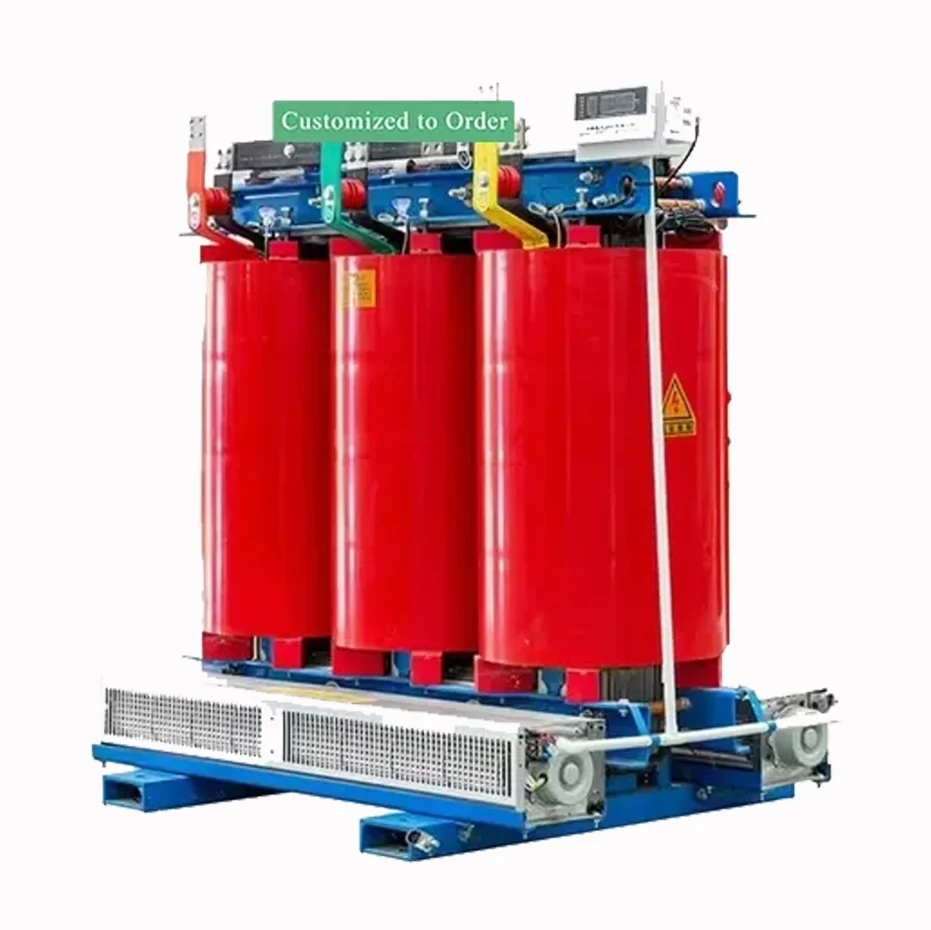
As energy markets adapt to stringent carbon neutrality regulations and digitalized power networks, maximizing component performance across medium-voltage networks is essential. Modern industrial plants, commercial skyscrapers, and renewable integration facilities increasingly depend on solid dielectric insulation solutions over traditional liquid-immersed units. A high-efficiency dry type transformer eliminates flammable mineral oil hazards, reducing environmental contamination risks while providing superior fire safety inside densely populated structures. As we advance through 2026, energy standards such as IEC 60076-11 and regional eco-design mandates require facility managers and power distribution engineers to rethink operational losses. Optimizing a dry type transformer involves more than selecting basic rating capacity; it demands a granular understanding of core material innovation, thermal dissipation dynamics, harmonic mitigation, and predictive maintenance monitoring. At APEX TECHNOLOGIES, we manufacture advanced Cast Resin (CRT) and Vacuum Pressure Impregnated (VPI) equipment tailored to meet these evolving operational criteria, ensuring robust performance across demanding global applications.
Core Material Innovations and Magnetic Loss Reduction
No-load losses—often referred to as core losses—occur continuously whenever a dry type transformer remains energized, regardless of connected load levels. To optimize efficiency in 2026, electromagnetic core design has shifted toward ultra-low loss materials. Premium amorphous alloy cores and high-permeability grain-oriented silicon steel (CRGO) dramatically reduce hysteresis and eddy current losses within the magnetic circuit. Incorporating step-lap mitered core joints further minimizes magnetic flux disturbance and reduces acoustic vibration. By replacing conventional core laminations with amorphous metals in a modern dry type transformer, baseline core losses can drop by up to 70% compared to legacy installations. This technological jump not only lowers lifecycle utility bills for industrial facilities but also directly reduces continuous heat generation within enclosed switchgear rooms. APEX TECHNOLOGIES integrates state-of-the-art miter-cut core assembly techniques into every dry type transformer, helping operators meet strict EcoDesign Tier 2 efficiency benchmarks while lowering total cost of ownership.
Advanced Winding Techniques and Thermal Management
Load losses, or copper losses, scale exponentially with operational current demand, making winding geometry and conductor selection pivotal for overall efficiency. Achieving high thermal efficiency in a dry type transformer relies on precision-engineered aluminum or copper foil windings rather than standard wire-wound configurations. Foil winding eliminates axial short-circuit forces, balances thermal distribution, and significantly minimizes localized hot spots. Furthermore, optimizing internal air duct geometry inside a cast resin dry type transformer enhances natural convection (AN) cooling performance. When operating under heavy cyclic loads, adding intelligent forced air (AF) cross-flow fans with variable-frequency controls prevents thermal throttling without consuming unnecessary auxiliary power. At APEX TECHNOLOGIES, our engineering team utilizes finite element thermal modeling to optimize epoxy resin encapsulation. This ensures that every dry type transformer maintains Class H or Class F insulation resilience, allowing stable continuous operation even under elevated ambient temperature conditions without suffering premature insulation degradation.
Harmonic Mitigation and Smart Grid Integration
The surge in non-linear industrial loads—such as variable frequency drives (VFDs), EV charging hubs, datacenter UPS systems, and solar inverters—introduces severe harmonic distortion into modern distribution grids. Unmitigated harmonics induce high-frequency eddy currents and stray losses within a dry type transformer, accelerating thermal stress and reducing net operating efficiency. Optimizing performance in 2026 requires deploying K-factor rated or phase-shifting dry type transformer architectures specifically engineered to handle harmonic currents. Integrating real-time IoT sensor arrays directly into the winding structure of a dry type transformer allows operators to track hot-spot temperatures, partial discharge levels, ambient humidity, and vibration spectrums continuously. APEX TECHNOLOGIES equips custom power distribution assemblies with intelligent monitoring interfaces, enabling predictive maintenance algorithms to identify operational anomalies before thermal losses compound into catastrophic equipment failure.
Lifecycle Asset Optimization and Eco-Friendly Architecture
Evaluating true transformer efficiency extends beyond initial nameplate ratings; it encompasses total lifecycle performance, maintenance frequency, and end-of-life recyclability. A well-engineered dry type transformer offers substantial structural advantages over oil-filled counterparts, as it eliminates oil retention pits, fire suppression deluge systems, and routine dielectric fluid sampling. Because a cast resin dry type transformer uses non-toxic, self-extinguishing epoxy compounds, it can be installed in close proximity to major load centers. Placing a dry type transformer closer to heavy industrial machinery or data rack arrays drastically shortens low-voltage busway runs, reducing
Partnering with APEX TECHNOLOGIES for Next-Generation Efficiency
Achieving maximum energy efficiency in 2026 requires matching exact load profiles with tailored transformer engineering. Whether retrofitting an existing urban substation or constructing a utility-scale microgrid, selecting the right dry type transformer configuration directly dictates system reliability and long-term carbon footprint. APEX TECHNOLOGIES stands at the forefront of electrical distribution technology, delivering high-performance cast resin and VPI transformers tailored to global grid standards. Our manufacturing facilities combine automated winding precision, rigorous partial discharge testing, and customized enclosure design to build every dry type transformer for peak efficiency and uncompromising safety. Contact the engineering specialists at APEX TECHNOLOGIES today to evaluate your distribution network and deploy optimized dry type transformer solutions engineered for the demands of modern industry.
Table of Contents
- The Evolving Paradigm of Indoor Electrical Distribution
- Core Material Innovations and Magnetic Loss Reduction
- Advanced Winding Techniques and Thermal Management
- Harmonic Mitigation and Smart Grid Integration
- Lifecycle Asset Optimization and Eco-Friendly Architecture
- Partnering with APEX TECHNOLOGIES for Next-Generation Efficiency