 EN
EN

Transformer RFQ Checklist: 12 Technical Data Points Buyers Should Prepare
|
Slug |
transformer-rfq-checklist-technical-data |
|
Category |
Knowledge / Buying Guide |
|
Meta title |
Transformer RFQ Checklist: 12 Data Points | Apex Electrics |
|
Meta description |
Prepare a clearer transformer RFQ with 12 essential data points covering ratings, standards, site conditions, accessories, testing and delivery. |
|
Target keywords |
transformer RFQ checklist; transformer specification; transformer quotation; transformer technical data |
|
Internal links |
Power Transformers; Oil-Immersed Distribution Transformers; Contact / Request a Quote |
|
Image file |
article-01-transformer-rfq-checklist.png |
|
Image alt |
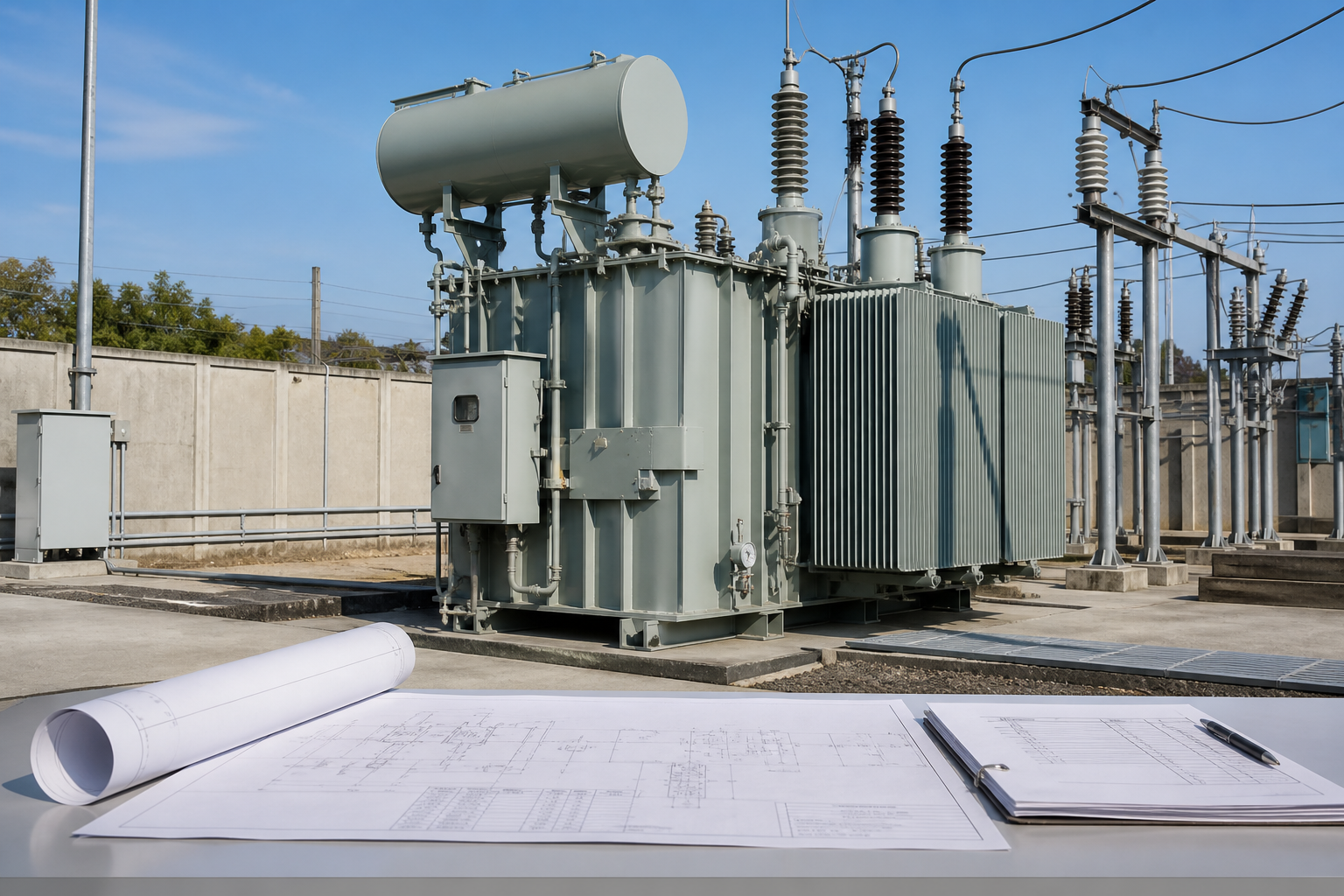
Oil-immersed transformer with engineering drawings for transformer RFQ preparation |
A complete RFQ allows the technical and commercial review to begin from the same project baseline.
Why a complete RFQ matters
A transformer quotation is only as reliable as the project information behind it. Two transformers with the same kVA and primary voltage can require different insulation levels, winding connections, losses, cooling arrangements, accessories, dimensions and test plans. When the RFQ contains only voltage and capacity, the supplier has to make assumptions. Those assumptions can create repeated clarification, price changes and avoidable delays after the order is placed.
The purpose of an RFQ checklist is not to make the buyer perform the transformer design. It is to define the electrical duty, installation environment and delivery expectations clearly enough for the supplier to propose a compliant solution. The following 12 data points provide a practical baseline for utility, EPC, industrial and renewable-energy projects.
1. Rated power and quantity
State the required kVA or MVA rating, the number of units and whether the rating is continuous or linked to a defined load cycle. If future expansion or parallel operation is planned, mention it at the RFQ stage. This helps the supplier review thermal duty, impedance coordination and the commercial effect of different rating options.
2. Primary and secondary voltage
Provide the nominal system voltages and, where available, the highest system voltage. For multi-winding transformers, list every winding voltage and its intended duty. If the unit connects to an inverter, generator, utility feeder or existing switchgear, include the relevant interface voltage rather than relying on a general voltage class.
3. Frequency and phase
Confirm 50 Hz or 60 Hz and whether the system is single-phase or three-phase. Frequency affects the magnetic design, while phase configuration affects the winding arrangement, terminals and connection details.
4. Vector group and neutral requirements
Specify the required vector group, grounding arrangement and whether a neutral terminal must be brought out. If the vector group has not yet been selected, provide the upstream and downstream system information so it can be reviewed during technical clarification.
5. Tapping and voltage regulation
Indicate whether the transformer requires an off-circuit tap changer or an on-load tap changer, together with the tapping range and step size. For regulated systems, include the expected control philosophy and any interface requirements.
6. Impedance and short-circuit context
If a target impedance is required, state it with the applicable tolerance and reference rating. Existing fault-level studies, parallel transformer data and downstream equipment ratings are useful because impedance influences fault current, voltage regulation and load sharing.
7. Insulation level and applicable standard
Identify the required IEC, IEEE/ANSI, CSA or utility specification. Provide the system insulation level, lightning impulse level and power-frequency withstand requirements when they are defined by the project. Standards should be treated as the design basis, while utility-specific clauses should be attached separately.
8. Installation environment
State indoor or outdoor installation, ambient temperature, altitude, humidity, pollution level, seismic requirement and any corrosive or hazardous conditions. Altitude and temperature can affect insulation and cooling performance. Coastal, desert, mining and chemical environments may require additional enclosure or coating provisions.
9. Cooling, temperature rise and efficiency
Confirm the preferred cooling method and any temperature-rise or loss requirements. Where efficiency regulations apply, identify the destination market and the required efficiency basis. Do not compare loss figures unless the rating, voltage, frequency, temperature reference and test basis are aligned.
10. Terminations, enclosure and accessories
Describe cable or bus connections, bushing arrangement, terminal orientation, enclosure rating and required accessories. Typical items may include winding and oil temperature indication, pressure relief, oil level indication, surge protection, current transformers, marshalling box and monitoring contacts. Select accessories according to the operating and maintenance plan rather than copying a generic list.
11. Testing and document package
Define the required routine tests, any type or special tests, witness points and the language and format of the document package. A practical document list can include approved drawings, nameplate data, test reports, manuals, packing list and shipping dimensions. These requirements influence both schedule and price and should be agreed before production.
12. Delivery, packing and commercial scope
Provide the destination, requested delivery window, Incoterm and any transport limitations such as port access, road dimensions or maximum shipping weight. Clarify whether the quotation covers equipment only, supervision, spare parts, commissioning support or a wider package.
A practical way to submit the RFQ
A single-line diagram, load schedule and site data sheet can often answer more questions than a long email. Mark unknown items as ‘to be confirmed’ instead of leaving them ambiguous. Apex Electrics can then organize the technical clarification, identify missing inputs and coordinate the appropriate product and manufacturing resources for the project.
|
Suggested CTA Send your transformer schedule, single-line diagram and destination to Apex Electrics for a structured technical review and quotation baseline. |