 EN
EN

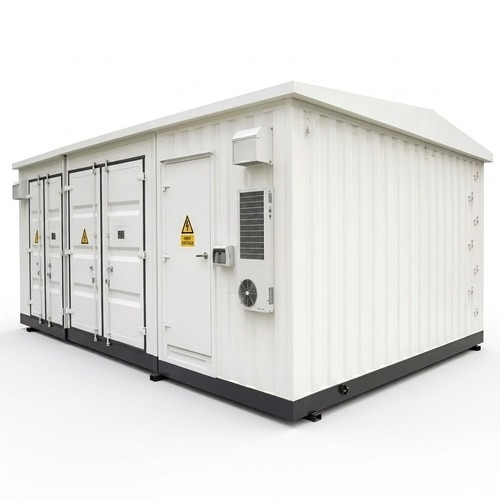
Leading Prefabricated Substation Manufacturers by Global Reach and Technical Authority
The global market for prefabricated substations is projected to reach USD 70.01 billion by 2031, driven by advanced communication protocols and the urgent need for resilient, digitally enabled grid infrastructure (Kings Research, 2023).
ABB, Siemens, and Schneider Electric: Engineering Standards, Digital Integration, and Global Project Scale
ABB, Siemens, and Schneider Electric represent the apex of technical authority and global execution capability in prefabricated substation manufacturing. All three rigorously adhere to IEC 62271 for high-voltage switchgear and integrate digital ecosystems that extend value beyond hardware delivery.
ABB has pioneered digital twin deployment across its modular substation portfolio—enabling operators to simulate load scenarios, validate protection schemes, and forecast maintenance needs before physical installation. This lifecycle intelligence transforms capital investment into long-term operational advantage.
Siemens embeds its IoT-enabled Desigo CC platform directly into factory-assembled units, delivering real-time condition monitoring, predictive analytics, and built-in compliance with IEC 62443 for industrial cybersecurity. Its solutions are deployed across critical infrastructure—from offshore wind interconnections to high-speed rail—proving that modular designs meet the highest transmission-grade reliability and regulatory expectations.
Schneider Electric leverages EcoStruxure Grid to unify hardware, software, and services into a single architecture. Its turnkey, high-voltage modules undergo full factory testing—including partial discharge and dielectric validation—before shipment, enabling energization within aggressive construction timelines that smaller fabricators cannot replicate.
Collectively, these firms combine deep engineering heritage, globally harmonized standards compliance, and field-proven scale—making them the default choice for national grid operators and mission-critical infrastructure projects.
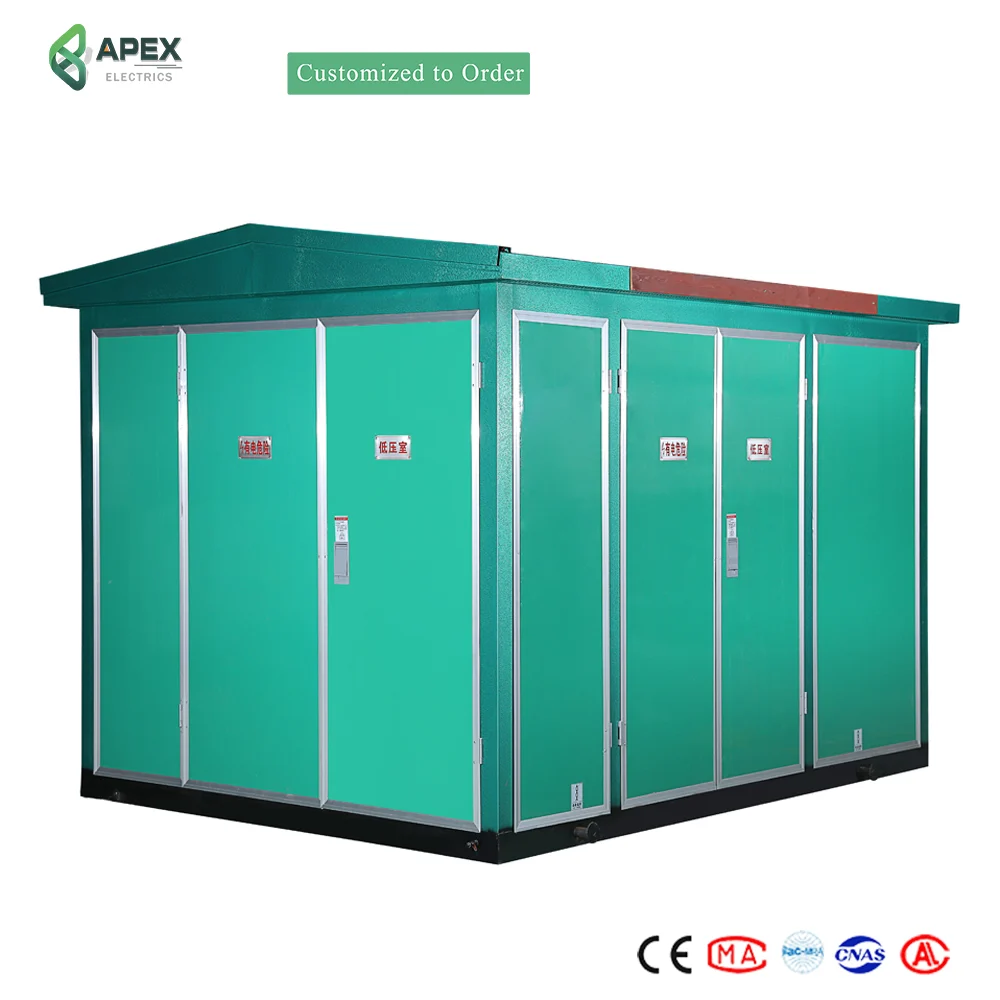
TBEA and Jinpan Technology: Cost-Effective Modular Innovation for Emerging Markets and Renewable Projects
TBEA and Jinpan Technology exemplify how technical authority is expanding beyond traditional Western incumbents—delivering high-performance, cost-optimized prefabricated substations tailored to the pace and constraints of emerging markets and renewable energy deployment.
TBEA dominates solar and wind farm integration across Asia and Africa, having deployed thousands of compact 35kV and 11kV units designed for rapid parallel energization. Its logistics-driven approach ensures units arrive site-ready—reducing commissioning time from months to days and accelerating commercial operation dates for independent power producers.
Jinpan Technology applies its leadership in cast resin transformer design to smart, modular substations engineered for industrial parks, data centers, and mining operations. Its standardized platform supports fast adaptation with climate-controlled enclosures, harmonic filters, or arc-flash mitigation—without re-engineering core systems. This balance of repeatability and flexibility enables deployment in 4–6 weeks, with 99.7% first-pass reliability across more than 200 project sites in 2025.
For developers building large-scale renewable assets—where a 50MW solar farm may require two dozen substations—the logistical and financial impossibility of on-site civil works makes factory-assembled, drop-in units not just preferable, but essential.
How Prefabricated Substation Types Align with Critical Deployment Scenarios
Urban Microgrids, Remote Mining, and Wind/Solar Farms: Selecting the Right Prefab Architecture
Deployment context dictates architecture—not vice versa. Urban microgrids demand space efficiency and ultra-low audible noise, making underground or compact indoor substations the optimal fit. These units integrate seamlessly into basements or mixed-use developments without disrupting aesthetics or daily life.
Remote mining sites require industrial-grade resilience: reinforced enclosures, oversized cooling, and vibration-dampened mounting to withstand extreme temperatures, abrasive dust, and continuous mechanical stress. Downtime here carries outsized cost—both financially and operationally—so redundancy, environmental hardening, and remote diagnostics are non-negotiable.
Wind and solar farms prioritize speed-to-grid above all else. A 50MW solar installation typically requires over 20 substations; constructing each on-site is impractical. Containerized modular units—factory-assembled, fully tested under simulated operating conditions, and delivered turnkey—can be placed and commissioned in under 72 hours. This accelerates revenue generation and de-risks tight project schedules.
Leading manufacturers now offer diversified portfolios spanning underground, indoor, outdoor, and heavy-duty containerized architectures—ensuring buyers match technical specification precisely to environmental and operational realities, avoiding both costly over-specification and performance shortfalls.
2026 Selection Criteria: What Buyers Prioritize Beyond Brand Reputation
In 2026, procurement decisions for prefabricated substations hinge less on brand recognition and more on demonstrable, auditable capabilities: digital twin integration, verifiable cybersecurity compliance, and proven rapid commissioning.
Digital Twin Readiness, Cybersecurity Compliance (IEC 62443), and <72-Hour Onsite Commissioning
Digital twin readiness is now table stakes: 74% of utility RFPs mandate virtual replicas for remote monitoring, scenario simulation, and failure prediction (2025 industry survey). When implemented correctly—as with ABB’s integrated Asset Health Management or Siemens’ Navigator-based twins—this capability reduces lifecycle operational costs by up to 20%.
Cybersecurity is no longer optional. With reported grid-targeted cyber incidents rising 35% year-over-year, 68% of procurement contracts now require formal IEC 62443 certification (2025). Leading vendors embed security-by-design—secure boot, role-based access control, encrypted communications, and regular firmware updates—directly into their control systems and SCADA interfaces.
Finally, <72-hour onsite commissioning has emerged as a decisive differentiator. Pre-tested, pre-wired modules—combined with standardized interfaces and plug-and-play protection relays—cut connection delays by an average of 40% versus conventional substations. This speed is critical for meeting renewable PPA deadlines and minimizing financing carry costs.
The Standardization–Customization Balance: Ensuring Resilience Without Compromising Speed-to-Grid
Buyers increasingly seek configurable platforms—not rigid standardization nor fully bespoke engineering. A 2025 survey of transmission operators found 82% prioritize vendors offering modular, pre-certified frameworks with interchangeable components: switchgear bays, transformer options, or protection relay slots.
This hybrid model preserves the cost discipline and lead-time advantages of mass production while allowing targeted adaptation—such as adding seismic bracing for earthquake-prone regions or enhanced cooling for desert installations—without redesigning the entire system. The result is deployment in 4–6 weeks, a 30% acceleration over fully custom builds, and sustained reliability at scale.
FAQ Section
What are prefabricated substations?
Prefabricated substations are factory-assembled units designed for rapid and efficient deployment in grid infrastructure. These modular systems integrate high-voltage switchgear, transformers, protection relays, and enclosures for seamless onsite commissioning.
Which companies are leaders in the prefabricated substation industry?
Companies such as ABB, Siemens, Schneider Electric, TBEA, and Jinpan Technology lead the industry, offering innovative solutions optimized for varied deployment contexts like urban microgrids, remote mining, and renewable energy projects.
What deployment contexts drive the selection of prefabricated substations?
Deployment contexts like urban microgrids, remote mining sites, and renewable energy installations determine the choice of substation architecture. Space efficiency, resilience, and speed-to-grid are key factors influencing design and selection.
Why is cybersecurity compliance essential for prefabricated substations?
Cybersecurity compliance, such as adherence to IEC 62443, is crucial to protecting grid assets from increasing cyber threats. This includes secure system booting, encrypted communications, and regular firmware updates.
How does rapid commissioning benefit renewable energy projects?
Rapid commissioning minimizes delays, accelerates revenue generation, and ensures alignment with contract timelines, making prefabricated substations essential for large-scale solar and wind farm operations.
Table of Contents
- Leading Prefabricated Substation Manufacturers by Global Reach and Technical Authority
- How Prefabricated Substation Types Align with Critical Deployment Scenarios
- 2026 Selection Criteria: What Buyers Prioritize Beyond Brand Reputation
-
FAQ Section
- What are prefabricated substations?
- Which companies are leaders in the prefabricated substation industry?
- What deployment contexts drive the selection of prefabricated substations?
- Why is cybersecurity compliance essential for prefabricated substations?
- How does rapid commissioning benefit renewable energy projects?