 EN
EN

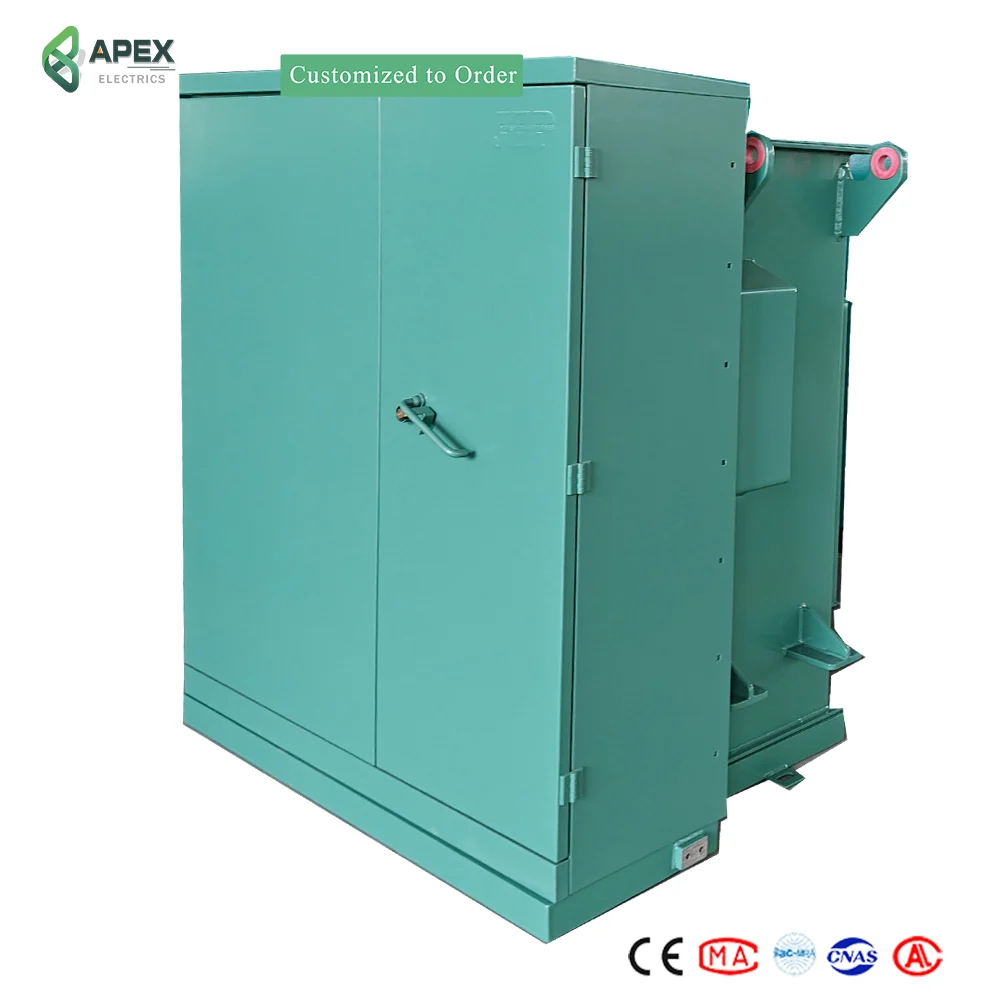
Pole Mounted Transformer Manufacturers: Enabling Grid Reliability and Infrastructure Modernization
ANSI/IEEE Compliance and Utility-Specific Engineering as Core Competencies
Pole mounted transformer manufacturers must embed ANSI (American National Standards Institute)/IEEE (Institute of Electrical and Electronics Engineers) compliance into every design phase. Utilities require units that meet strict C57.12.20–2023 performance criteria for overvoltage, short-circuit withstand, and thermal endurance. Beyond these baselines, leading manufacturers engineer for precise utility specifications—including voltage ratings, BIL (Basic Insulation Level) coordination, and bushing configurations—ensuring seamless integration with existing overhead infrastructure. Coastal cooperatives, for example, demand enhanced corrosion protection and surge arresters rated for salt-laden environments, while cold-climate providers prioritize low-temperature oil blends and insulation systems that maintain dielectric strength at –40 °F. This utility-specific engineering extends to loss evaluation frameworks, where manufacturers offer tiered efficiency levels aligned with total cost of ownership models. Rigorous testing—including partial discharge, impulse, and temperature rise—validates that each unit performs reliably under the load profiles and fault currents of its intended grid application, directly supporting improved SAIDI (System Average Interruption Duration Index) outcomes.
Retrofit Leadership in Aging Rural Grids: Domestic Manufacturers in Action
Domestic producers now lead the $3.2 billion annual retrofit market for pole-mounted assets (EIA, 2023). With over 30% of rural transformers exceeding their 40-year design life, rapid replacement—without field modifications—is critical. U.S.-based manufacturers maintain reconfigurable winding centers and stocked core steel inventories, enabling production of drop-in units that match legacy footprints, bushing locations, and voltage ratios within 8–12 weeks. This agility allows utilities to replace failed units during scheduled outages without altering pole brackets or conductor clearances. In wide-area storm hardening programs, these manufacturers deliver pre-approved upgrade kits that enhance surge protection and optimize impedance values in a single coordinated swap. Proximity to U.S. utilities also reduces lead times and transportation costs—making it economically viable to address the 2.7 million distribution transformers the Department of Energy estimates will need replacement by 2030. By combining ANSI-compliant engineering with responsive manufacturing, domestic pole mounted transformer manufacturers are transforming rural grid aging from a liability into a managed, phased modernization.
Key Demand Drivers Accelerating Growth for Pole Mounted Transformer Manufacturers
Climate-Driven Replacement Cycles: From Storm Recovery to Proactive Hardening
Extreme weather events are reshaping utility investment strategies. In 2023 alone, the U.S. experienced 28 billion-dollar weather disasters—more than triple the 1980s average of 8.5 per year (NOAA). Exposed to wind, ice, and lightning, pole-mounted transformers are especially vulnerable; each failure can leave hundreds of customers without power. This exposure is driving a strategic shift—from reactive replacement toward proactive system hardening. For manufacturers, that means engineering units with higher basic impulse insulation levels, corrosion-resistant enclosures, and integrated surge protection. Cooperatives and investor-owned utilities are now pre-emptively upgrading distribution equipment—not just after storms, but ahead of them. Demand is strongest in hurricane-prone coastal regions and wildfire-risk areas, where transformer failure poses both safety and reliability risks. Leading manufacturers are embedding climate resilience into standard product designs, making hardened pole-mounted transformers a baseline offering—not a premium add-on.
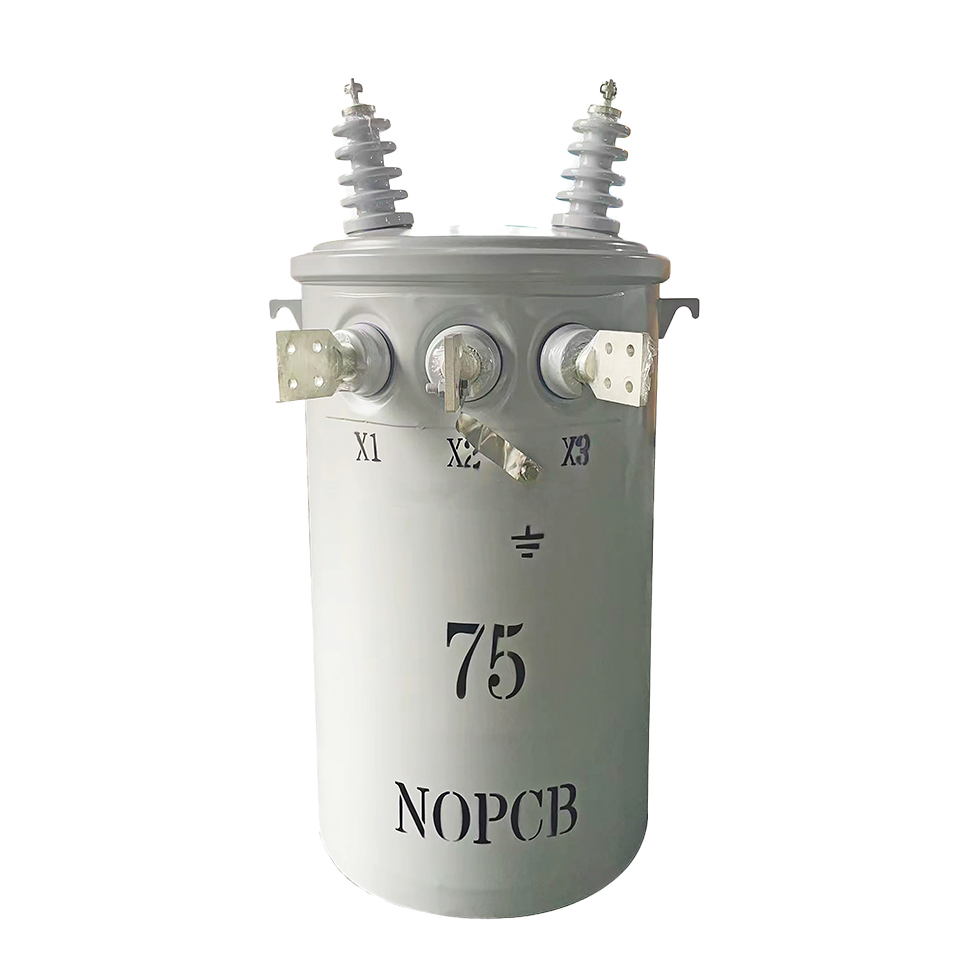
Electrification Scale-Up: Meeting Projected 60–80M Unit Demand by 2050
The electrification of transportation, heating, and industrial processes is generating unprecedented demand for distribution transformers. According to the National Renewable Energy Laboratory’s Electrification Futures Study, the U.S. may require 60–80 million distribution transformers by 2050 to support full electrification. This projection includes new installations, incremental replacements of aging units, and capacity upgrades to manage bidirectional power flows from rooftop solar and EV charging. As the last-mile interface of the grid, pole-mounted transformers sit at the center of this scale-up. Manufacturers are responding by expanding production capacity, adopting modular designs, and investing in amorphous metal cores that reduce no-load losses by up to 70%. Yet volume alone isn’t enough—speed is critical: lead times for standard distribution transformers have stretched from 8–12 weeks to over a year in some markets. To close the gap, leading suppliers are streamlining supply chains and qualifying additional component sources. As utilities and regulators accelerate grid modernization, the ability to deliver high-efficiency, reliable pole-mounted transformers at scale has become a defining competitive differentiator.
Innovation Priorities: Smart, Adaptive, and Renewable-Ready Transformers
DER Integration Challenges and the Rise of Bi-Directional & Load-Adaptive Designs
The rapid growth of distributed energy resources (DERs)—including rooftop solar and small wind—introduces unprecedented voltage volatility and harmonic distortion on distribution feeders. Traditional unidirectional pole-mounted transformers struggle with reverse power flows, risking overheating, insulation stress, and nuisance tripping. To maintain stability, leading manufacturers are integrating bi-directional capability and load-adaptive controls directly into transformer designs. These units use real-time sensing to dynamically adjust taps, manage reactive power, and isolate sections during faults. Advanced monitoring modules communicate with utility SCADA systems, enabling predictive maintenance and automated fault isolation. The result is a shift from passive operation to active grid reinforcement. Early adopters report a 40% reduction in voltage-related complaints and measurable extension of asset life—confirming that smart, load-adaptive architectures are no longer aspirational but essential engineering practice.
Modular Platforms for EV Fast Charging Hubs and Distributed Solar Interconnection
Electrification of transport and the proliferation of community solar demand a new class of transformer: scalable, plug-and-play, and ready for rapid deployment. Modular pole-mounted platforms are engineered specifically for clustered EV fast-charging stations—where load swings of 150–350 kW occur in seconds—and for aggregating power from multiple distributed solar inverters. These designs decouple the core tank, cooling, and monitoring modules, allowing field up-rating of a base unit without full replacement. This modularity slashes installation time by up to 50% and enables utilities to stage capacity in line with actual load growth. Built-in communication interfaces also support demand-response schemes, allowing transformers to throttle EV charging during grid peaks. By combining physical flexibility with digital intelligence, modular platforms directly address the infrastructure bottleneck threatening to delay the 60–80 million new transformer connections projected by 2050.
FAQs
What are the key performance criteria for pole-mounted transformers?
Pole-mounted transformers must meet ANSI/IEEE compliance standards, including performance criteria for overvoltage, short-circuit withstand, and thermal endurance.
Why is climate resilience important for pole-mounted transformers?
Climate resilience ensures that pole-mounted transformers can withstand extreme weather events, such as wind, ice, and lightning, reducing customer outages and improving reliability.
What role do modular designs play in transformer innovation?
Modular designs allow rapid deployment, physical scalability, and easy upgrades in line with load growth, making them ideal for EV fast-charging hubs and solar interconnection.
How do manufacturers address DER integration challenges?
Manufacturers are developing bi-directional and load-adaptive designs that manage reverse power flows and enhance grid stability under distributed energy resource conditions.