 EN
EN

[Buying Guide] A Three-Step Strategy for Selecting the Ideal Distribution Transformer
Selecting a transformer is a critical engineering decision that balances initial capital expenditure with long-term operational reliability and energy costs. To ensure your selection is both professional and cost-effective, follow this three-step strategy.
Step 1: Precise Load Calculation and Capacity Reserve
The rated capacity is the foundation of your selection.
⭕️The Golden Rule: It is recommended to maintain a long-term load factor between 60% \sim 70$. This is the peak efficiency window where electrical losses are minimized.
⭕️Future-Proofing: Always factor in a $20\%$ capacity reserve for future expansions or seasonal peak demands. Avoid "under-sizing," as chronic overloading leads to excessive heat and drastically reduces the insulation lifespan.
Step 2: Matching the Type to the Environment
The physical structure of the transformer must suit its "home" to ensure safety and longevity:
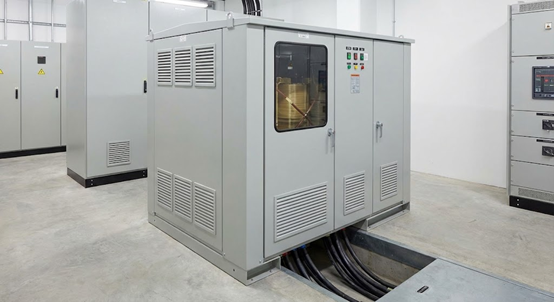
⭕️Indoor & High-Occupancy Areas: Choose Cast Resin Dry-type Transformers (e.g., SCB Series).
Professional Requirement: As shown in the field images, indoor dry-type units must be installed within a standard protective enclosure (as seen in) to prevent accidental contact and debris ingress.
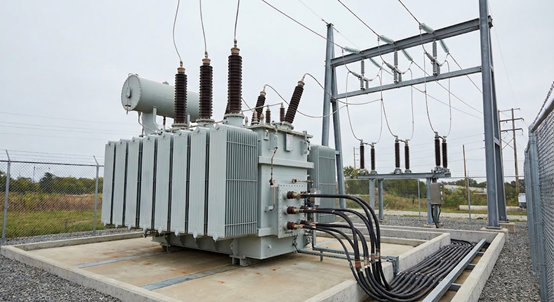
⭕️Outdoor & Industrial Grids: Oil-immersed Transformers (e.g., S22 Series) offer the best price-to-performance ratio.
Professional Requirement: For outdoor installations, ensure high-voltage bushings are correctly connected to the overhead lines or busbar bridges with proper drip loops and clearances (as seen in).
Step 3: Prioritizing New Energy Efficiency Standards
In the context of global carbon neutrality, energy efficiency is a non-negotiable metric:
⭕️Level 1 Efficiency (NX1): Look for the "China Energy Efficiency Label" indicating Level 1. While the initial price is higher, the significantly lower no-load and load losses typically allow for a Return on Investment (ROI) within 3 to 5 years through electricity savings.
⭕️Level 2/3 Efficiency: Suitable for temporary projects or facilities with limited daily operating hours where upfront budget is the primary constraint.